Innovating clinical care to deliver better care to more people
I work with amazing cross functional teams to challenge the status quo, using new technologies and an open mind to ensure that scaling remote healthcare is done in a way that improves access, ensures safety and provides better care than traditional models of care.
-
Verify →Ilustre Colegio Oficial de Médicos de MadridICOMEM · 282889105
-
Verify →General Medical Council, United KingdomGMC · 7078829
-
Verify →Medical Council of IrelandIMC · 429282
-
Verify →College of Family Physicians of CanadaCFPC · 720470
 SCOPE Certified, World Obesity Federation
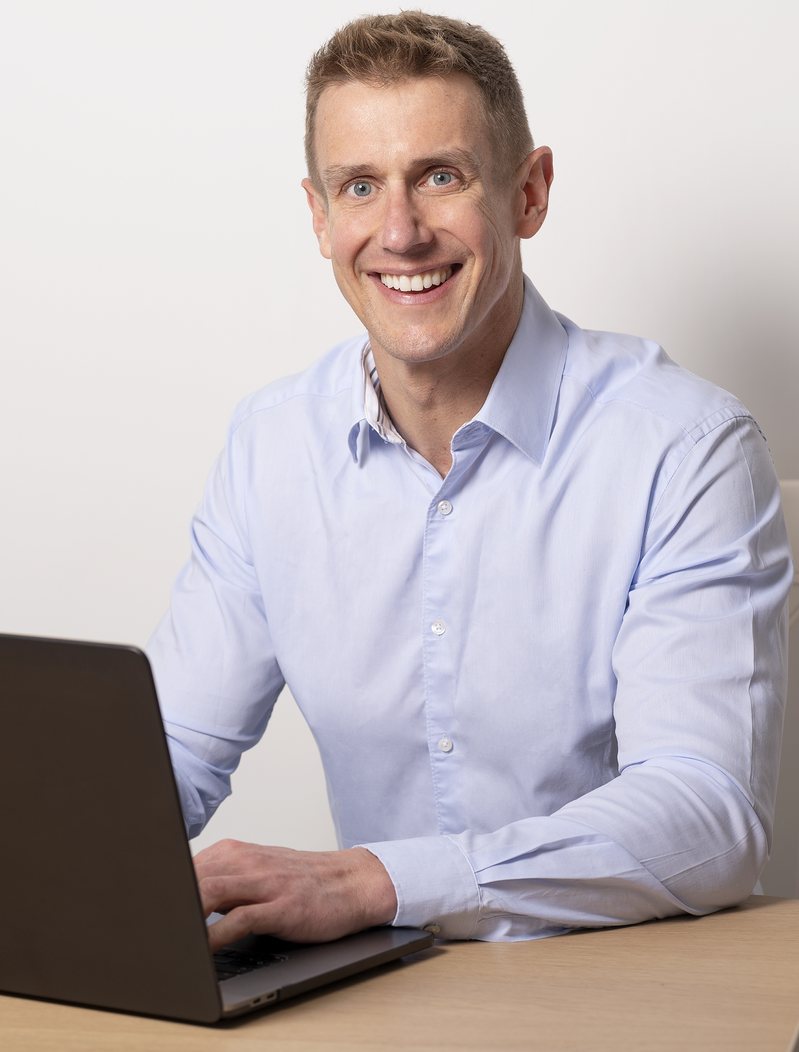
GP, Medical Director, Author, Innovator, Educator, Nice bloke
I split my clinical and medical director work between Nivelta, a private weight-management service in Spain, and HeliosX, and I also take regular shifts in urgent care with the NHS in Greater Manchester, keeping clinical practice and registration active alongside my digital health work.
My career in digital health began in 2019. As Clinical Director at Medicspot I built and led a team of twenty clinicians and introduced mobile-video and asynchronous consultation services. Before that I spent three years at North Manchester General Hospital, leading the development of a Same Day Care Centre that was held nationally as a model for reducing A&E pressures. I qualified from Hull York Medical School and completed GP training in Greater Manchester.
I write about the evidence base for GLP-1 medicine and the clinical management of obesity, as I believe that the treatment of the multi-organ cardiometabolic condition that presents itself as a raised BMI is not only a huge opportunity, but a responsibility for every doctor worldwide.
I also served as a medical advisor to OpenAI, reviewing the safety and usability of outputs from medical algorithms. I hold a PGCCE from Newcastle University and the SCOPE certification from the World Obesity Federation. I am an NHS-qualified Clinical Safety Officer and a Fellow of the Higher Education Academy.
Three pillars
How I think about treating obesity well: aim at the cause, work with the body's biology, and treat it as the long-term condition it is.
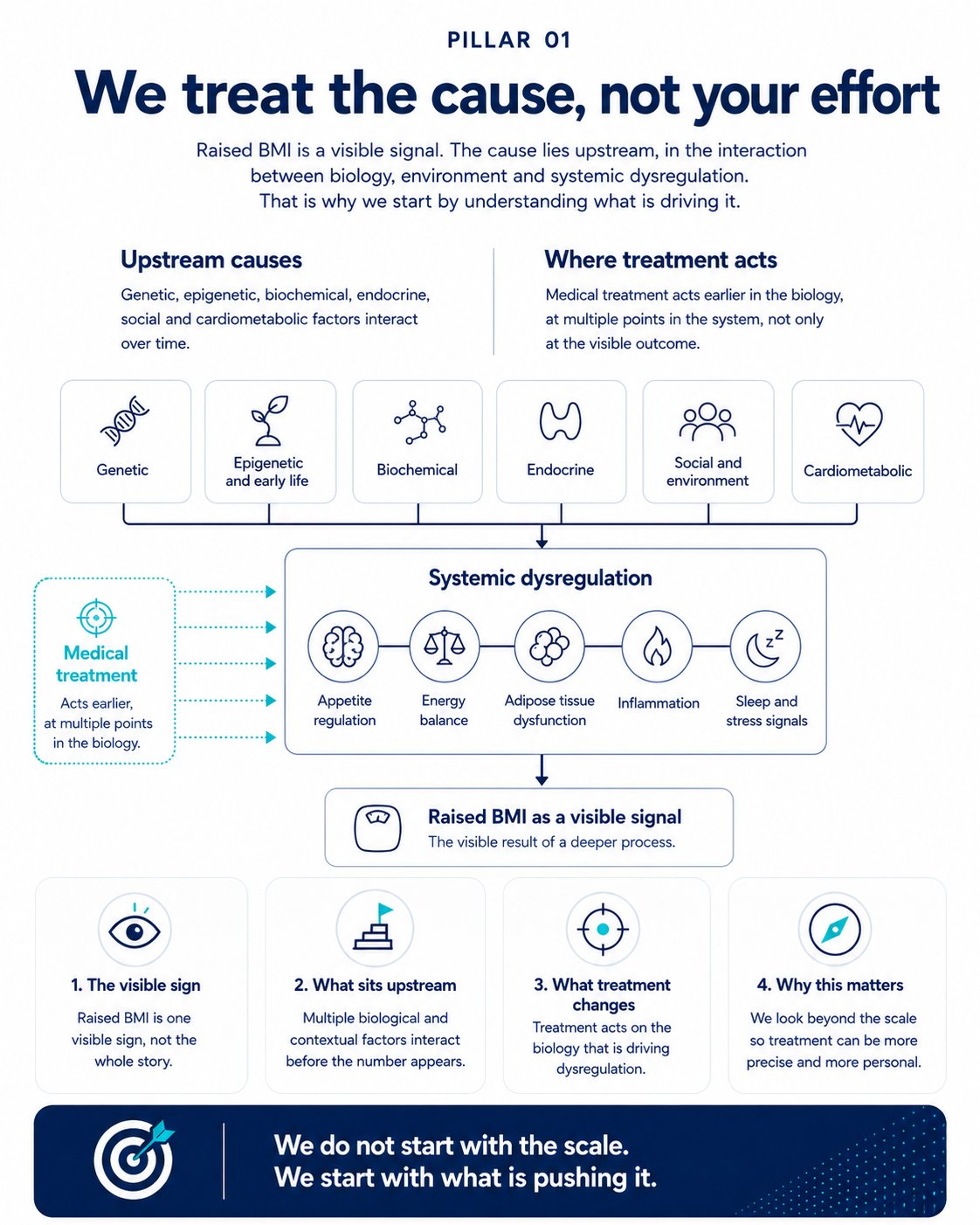
Treat the cause, not the effort
The scale is the end of a biological chain, not the start. Care should aim upstream, at the biology driving the defended weight.
Read the analysis →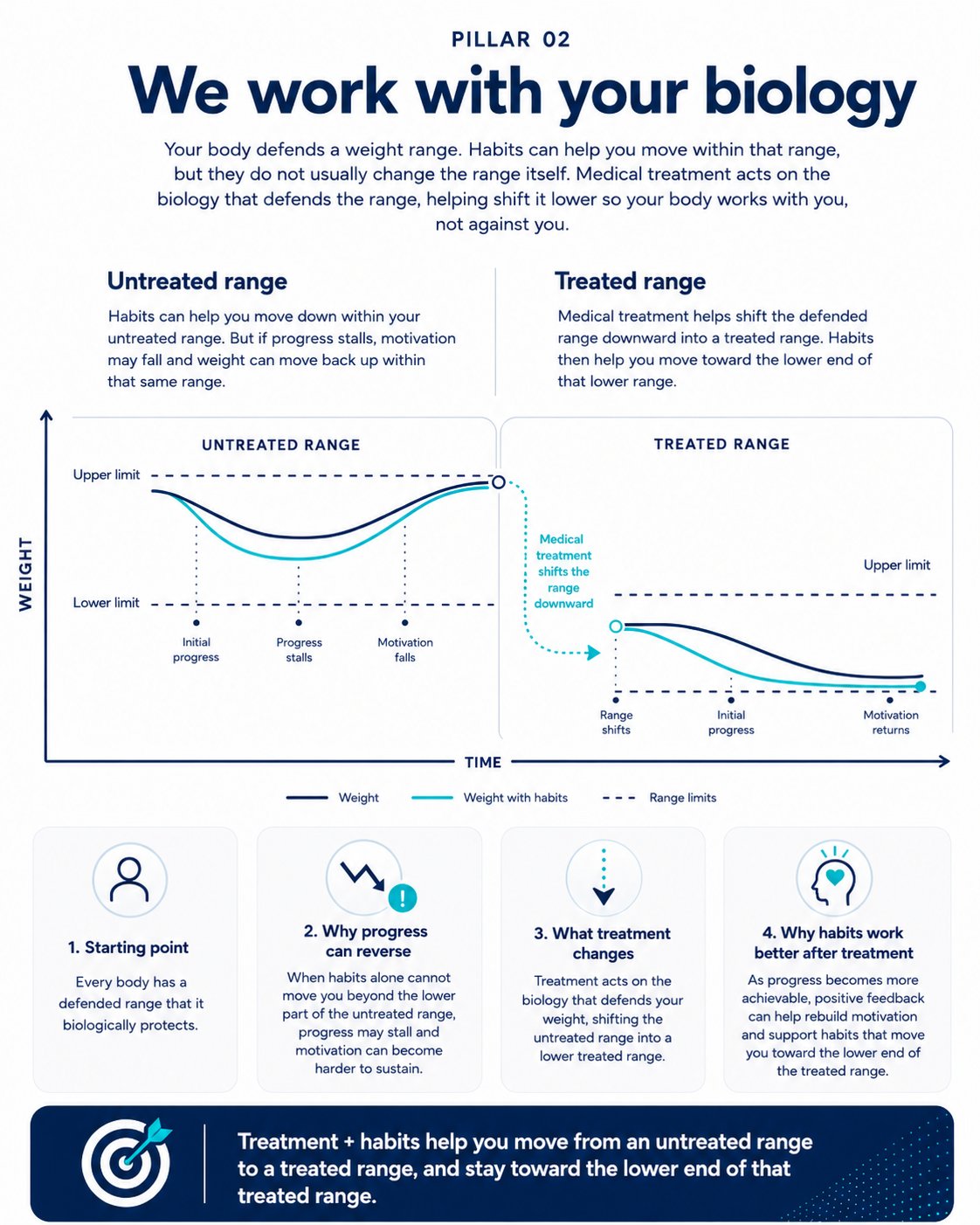
Work with the body's biology
Behaviour moves you within a defended range. Medicine lowers the range itself, so the body stops fighting to return to its old weight.
Read the analysis →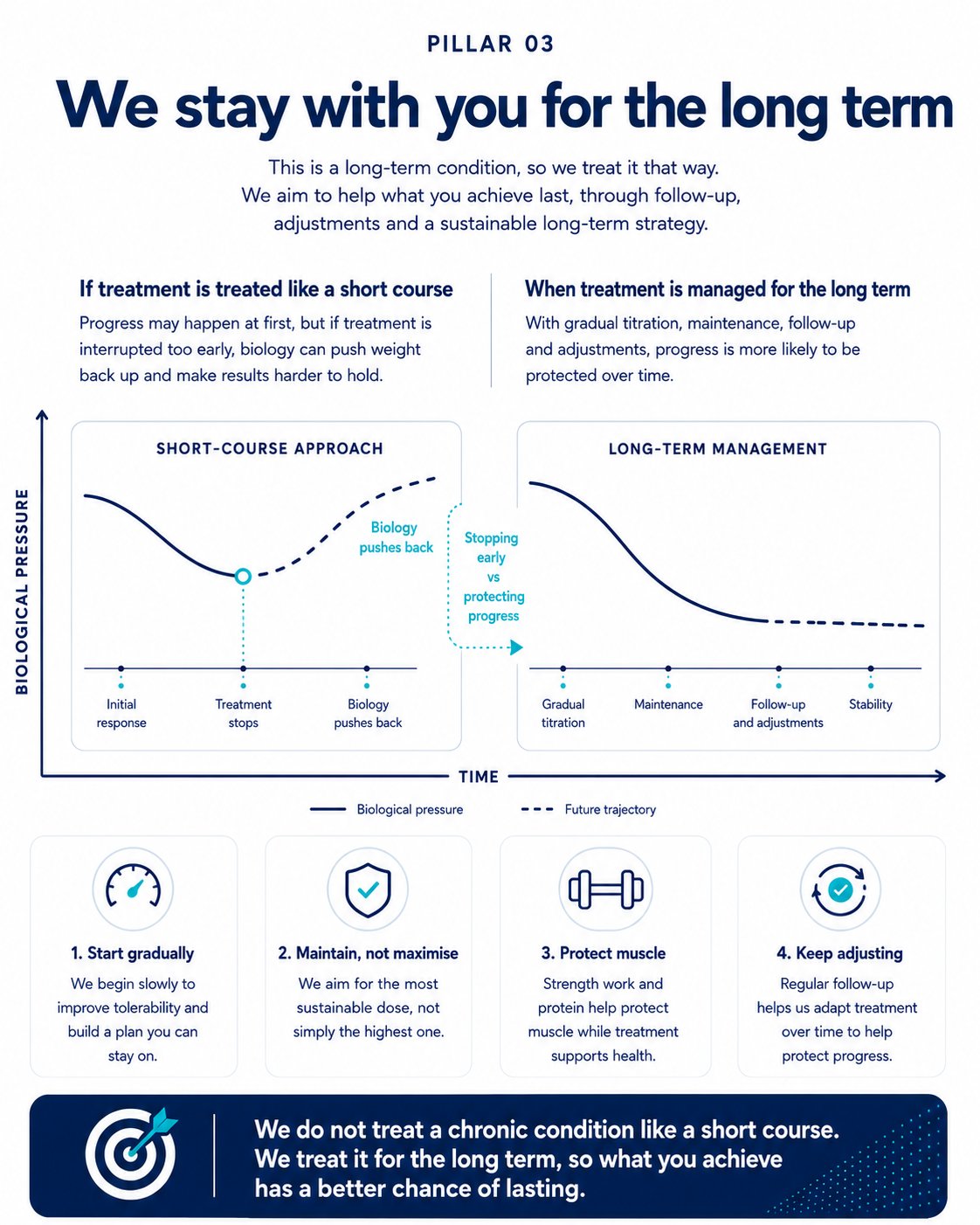
Long-term condition, long-term care
The biology that defends weight does not vanish when weight comes down. Treatment is planned for the long term, not the quick result.
Read the analysis →Writing
The BMJ analysis series on obesity, the Remote Consultations Handbook, and essays on how digital medicine works.
See writingMy approach to weight management
Why the way we think about weight has had to change, and what it means now that medicine can act on the biology underneath it.
Read the approachLily
Golden retriever. Chief of operations, morale, and unreasonably long walks. Takes her responsibilities very seriously, except when she does not.
Meet Lily